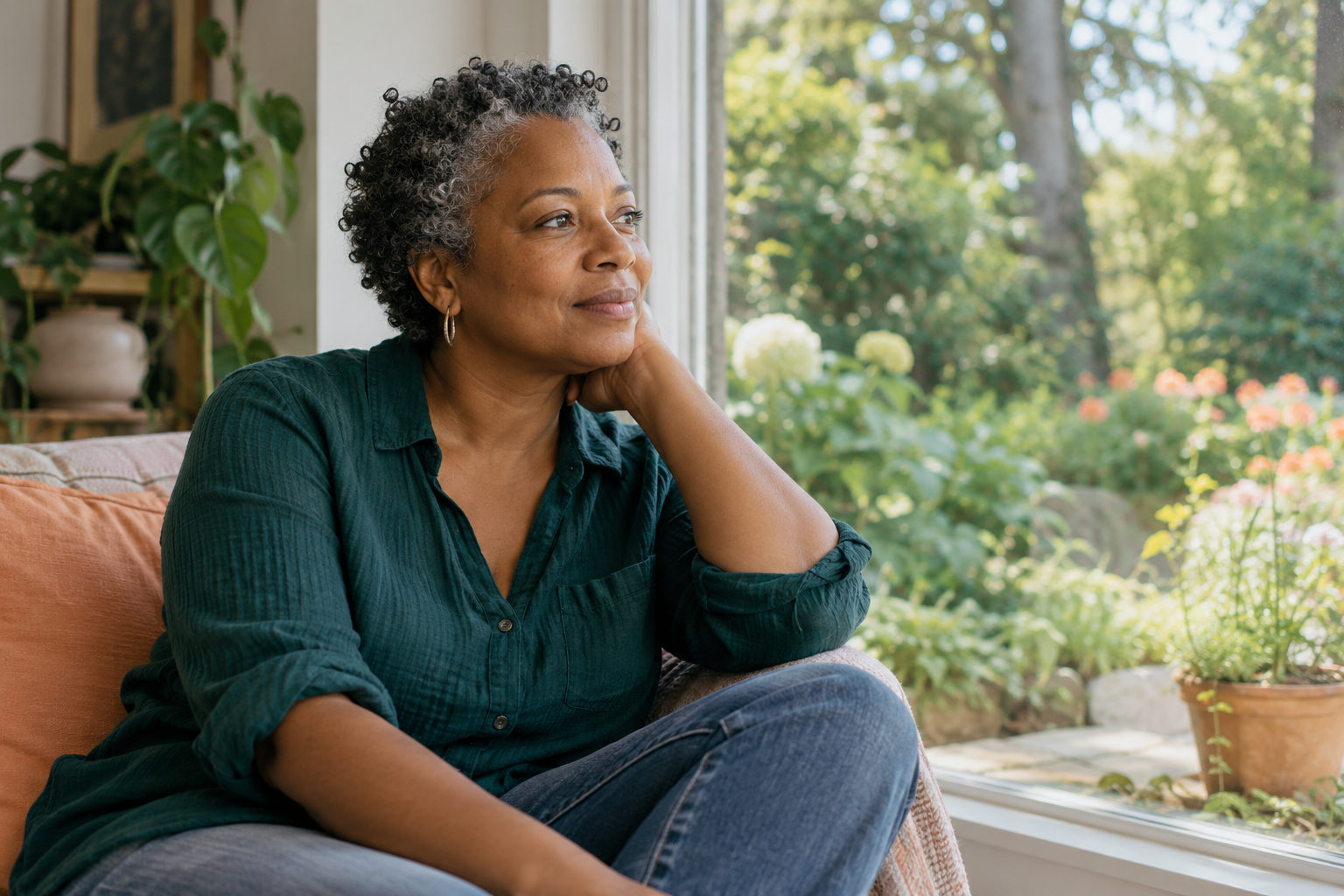
Sample story — placeholder content
Finding a way through change
A space for a woman’s own account of body changes, health questions and the everyday moments that matter.
Body & Metabolism
Read her story: Finding a way through change
WOMEN’S HEALTH · REAL LIVES · REAL QUESTIONS
For the messy middles, the unexpected turns, and the moments you feel like yourself again.
Exploring the parts of women’s health we don’t always talk about — from ADHD, menopause and metabolic health to peptides and emerging treatments — through personal stories, thoughtful questions and evidence that helps make sense of it all.
Find your starting point ↗Open minds. Honest conversations. Evidence matters.

The food noise, the starting again, the years of trying harder. You deserve room to imagine a different experience.
Explore weight & metabolic health ↗02 / MIND & DAILY LIFEThe overwhelm, the unfinished tasks, the effort nobody sees. Finding understanding can change how you see yourself.
Explore ADHD & everyday life ↗03 / REBUILDING & RECOVERYWhen pain, cravings or lost confidence make life smaller, the wish to feel like yourself still matters.
Explore recovery & movement ↗04 / PERIMENOPAUSE & MENOPAUSEChanges in sleep, energy, focus or your body can leave you wondering what happened. You deserve to feel heard.
Explore perimenopause & menopause ↗Real experiences from women navigating health, change and everything in between.
Sample story — placeholder content
A space for a woman’s own account of body changes, health questions and the everyday moments that matter.
Body & Metabolism
Read her story: Finding a way through change
Sample story — placeholder content
A space for a future story about recognising ADHD later in life and the questions it raises in everyday life.
Mind & Daily Life
Read her story: Making sense of a busy mindFrom established treatments to emerging peptides, we explore the research behind women’s health, the questions it raises, and what is still evolving.
Browse by topic or search for something specific.
A deeper look at one topic, bringing the research, the questions and the bigger picture together.
Looking beyond the weight-loss headlines.
Exploring the research on liver fat, blood glucose, knee pain and sleep apnoea — and why retatrutide may be about much more than weight loss.
Read the article ↗Curiosity without the hype.
Stories without the shame.
There is no ideal body, perfect recovery or single version of success. Your experience matters, and health is about more than a diagnosis.
Personal stories can help us feel understood, but they cannot tell us whether a treatment is right for someone else.
We link to the research, explain its limits and distinguish established evidence from emerging ideas — including peptides and newer treatments. No miracle promises.
Her Own Way brings personal experience and research together. Articles link to original sources, distinguish established evidence from emerging ideas, and are clear about what the research can — and cannot — tell us.
Read our editorial approach →